Showing posts with label Ham Wall. Show all posts

Thursday, 6 June 2013

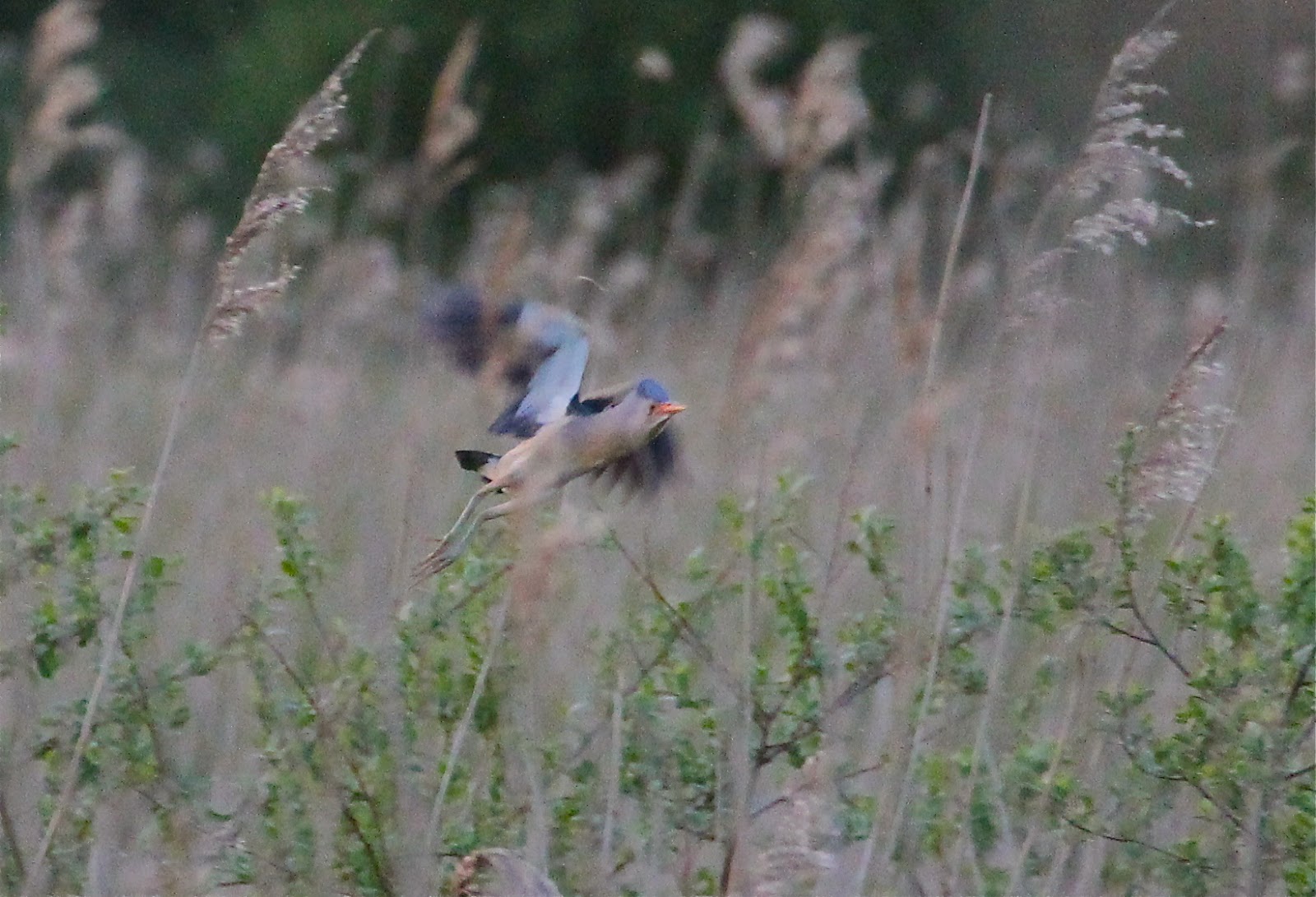
Landing pad for Little Bitterns


Jig jig jag jag, ping ping, boom, woof....woof....woof”.  Singing Reed Warblers everywhere, Bearded Tits feeding young and I can hear six booming Bitterns around me.  A Great White Egret flies by and a hidden Garganey rattles from a nearby reedy pool.  As it gets dark a Spotted Crake whips from the ditch next to the path.  Where am I?  Another foreign jaunt?  No, in deepest England on a wetland that didn't exist 20 years ago.  Woof....woof....woof, Oh, did I mention the singing Little Bittern.

Where wetland colonists are concerned, a recent study has shown that the six species that have established populations in the UK since 1960 all started to breed in protected areas.  Furthermore we know that larger sites are more likely to attract colonising species.  Such areas have been described as ‘landing pads’ for colonising species, allowing them to become established before viable populations spread out.  Ham Wall (and the wider Avalon Marshes in which it sits) is living proof of this as we hopefully see the first stages of Little Bittern establishing a regular population in the UK. 
Climate change analysis predicts that Little Bittern may colonise southern England. Although populations on the continent declined sharply over recent decades, the cause of which is considered to be drought conditions in the wintering areas, some recovery has been evident in the last ten years.  The Ham Wall birds returned this year as usual in early May and feeding flights will hopefully be evident soon.  The Avalon Marshes ‘heron hot spot’ is rapidly taking over from Suffolk as the key area for (Great) Bitterns in the UK, with 35 boomers this year.  At Ham Wall there are 12 boomers with at least 5 nests pinpointed so far from feeding flights.  

Previously I had looked at the developing reedbed ‘rejuvenation’ area, which as predicted, attracted good numbers of waterfowl in its early flooded phase.  A singing Pied-billed Grebe, along with Ferruginous Duck and Ring-necked Duck, were the highlights.   There were still plenty of duck on show during my visit – Pochard, Tufted, Shoveler, Wigeon and a couple of Garganey - but high water has pushed any waders to the margins.  Just a dozen Black-tailed Godwits, a few Redshank and a Whimbrel were visible.  However, as water levels drop by late summer, the area should increasingly attract a good range of autumn passage waders and waterbirds.

below: rejuvenation area and reed-nesting Grey Herons


Friday, 18 January 2013

Rejuvenation


Reedbeds under conservation management have traditionally been managed by rotational cutting, with the objective of slowing natural succession. Even on a small site, such an objective is questionable, but with a site of over 200 ha, this is not a feasible option. So Ham Wall in Somerset is the focus of a larger scale ‘reedbed rejuvenation’ project, a trial of a new form of reedbed management.  Compartments of up to 20 ha will be held at a lower water level for a number of years and reverted to grassland by a combination of cutting, burning and grazing. After maybe five years, the ground will be re-flooded to create shallow open water and reeds will slowly re-colonise.  Compartments will be 'rejuvenated' on rotation in order to maintain a range of successional states within the reedbed.


I returned to Ham Wall last week to look at the first compartment to be managed in this way and recently re-flooded after several years of drier conditions.  So what will happen next?  Well, we expect the newly flooded habitat will provide good feeding opportunities for a range of reedbed and wetland birds as the reeds regain dominance over a number of years.  In the short-term, it should attract large numbers of waders, wildfowl, egrets and herons over the next year or so as water levels fluctuate, particularly as they drop in late summer.  The land will be allowed to revert to reedbed, with higher water levels, and continue through its succession to old, littered reedbed, before the process is repeated.

Although early days, the first signs are promising.  Large numbers of duck, including Teal, Wigeon, Gadwall and Shoveler are already using the area, with Lapwing and up to 200 Snipe around the margins.  A dozen Water Pipits flitted around the margins.  A couple of Great White Egrets were in the area and it is hoped they will find the area to their liking.

Friday, 13 January 2012

Hard work


A couple of days working down in the south-west looking at ongoing projects was a bit of a strain. At Radipole Lake, the reedbed is in the best condition it’s been in for years after a considerable amount of restoration work. The chance of a booming Bittern this coming spring is as high as it has ever been. It would have been rude of course not to pop in to the visitor centre, where a quick check through the assembled mass of 300+ Med Gulls revealed 2 Ring-billed Gulls. Onward then to Exeter for an afternoon meeting at Goosemoor, a small area of land next to Bowling Green Marsh at Topsham and the site of the first Regulated Tidal Exchange in the UK. Regulated Tidal Exchange is a technique for creating and managing intertidal habitats. It uses regulated quantities of tidal water to manage the inundation regime and is often employed behind maintained sea defences. The technique has been particularly well developed in the eastern USA where impounded coastal wetlands, often in close proximity to built development, have benefited from the re-introduction of tidal flushing. The project at Goosemoor, implemented in 2004, has created a range of saline and brackish habitats (0.75 ha saline lagoon, 0.75 ha of mudflat and 4.25 ha of saltmarsh) for the benefit of breeding and wintering waterbirds. It would have been rude not to pop in to Bowling Green Marsh, just in time for the Red-breasted Goose to fly over our heads and land in front of us. At nearby Exminster Marshes, we looked at the successful use of wild bird cover crops (more of this at a later date), and were forced to endure some extremely close views of the long-staying Glossy Ibis as it wandered around us.

The following dawn saw us on Ham Wall, Somerset as a rough half-million Starlings left their roost and cruised over in one sky-wide, minute-long, wing-whirring flock. Two Great White Egrets joined a feeding frenzy of 20+ Little Egrets, half a dozen Grey Herons and a Bittern. Five Bewick’s Swans bugled nearby and an Otter spooked a flock of Tufted Duck. A quick crash around the reedbed to look at the conversion of reed into compost and briquettes was briefly interrupted by a flyover Water Pipit. And finally a quick look at the Somerset Levels was enlivened by the bunch of re-introduced Cranes with their hang-along wild mate (right-hand end, below). Work is a real chore.

Photo by John Crispin

Sunday, 12 June 2011

Spice up your reedbed.


More thinking about water level manipulation this week, back down at Ham Wall in Somerset. Reedbeds can be dull one-dimensional places for the visitor. Wet reedbeds in particular have just a few specialist species, most are generally difficult to see. This was evident at Ham Wall; Bitterns boomed and occasionally flew by, Water Rails squealed, Bearded Tits pinged and Reed Warblers jiggy jig jigged, but good views of any were few and far between. The open waters held a few common birds; Great Crested Grebes, Dabchicks, Pochards and Tufted Ducks, all with broods.

Another range of waterbirds prefer a more open, shallower habitat within the reedbed, and this can be created by keeping water levels lower and opening up the reed by grazing or cutting. One such area held Garganey, Shoveler, Gadwall, Little and Great White Egrets, Redshank, Lapwing and a migrant Dunlin. The margins of these open areas also provide good feeding areas for the likes of Bearded Tits and Bitterns.

Ideally for the visitor, a reedbed reserve should be multi-dimensional: having both high viewpoints over and into the pools, and low, close viewpoints into the reedy habitat. In addition, a mosaic of diverse habitat structure, created by water manipulation and grazing will help get the most out of a site for both wildlife and visitors.

Ham Wall continues to impress, with the key reedbed birds increasing in number and the tantalising prospect of colonisation by a greater range of southern species.

Wednesday, 20 April 2011

Boom boom boom boom


Night to day: moonlight, sunrise, feeding Great White Egret, Hairy Dragonfly.

Not John Lee Hooker but the Avalon Marshes in the middle of the night. The colonisation in recent years by Bitterns of this wet patch of Somerset has been a remarkable conservation success. As I stumbled around in the darkness as part of a co-ordinated survey to listen and watch for Bitterns, my personal tally was 12 ‘boomers’ although the area total may exceed 20 by the time all the results have been analysed.

When it comes to surveying Bitterns, the key census ‘unit’ is the booming male. There has been a complete count of booming Bitterns in the UK since 1990, from the low point of 11 boomers to the current high of 87 last year. Territories can overlap and males can be mobile so difficulties can arise sorting the individuals out. Survey results are drawn from careful mapping of boom locations combined with details on the characteristics of each individual bird’s boom. Booming reaches its peak around dusk and in the two hours before daybreak, but blundering around a moon-lit wetland has its advantages other than the repeated humpff humpff humpff coming out of the reeds. Cetti’s, Sedge and Grasshopper Warblers belt it out alongside the Marsh Frogs, a rattling Garganey flies over, and there’s always the chance of a whipping Spotted Crake. As day breaks, Little, Cattle and Great White Egrets all enter the notebook. As we settle in for a long watch over the reeds, my first Hairy Dragonfly and Red-eyed Damselfly of the year zip along the nearby ditch, and the water seems to ‘bubble’ with fish fry.

By contrast, the other, and arguably more important, census ‘unit’, the nesting female, is a much more difficult thing to quantify. When the eggs hatch, females are likely to make regular flights from the nest to feeding areas. A watch of around 6 hours is required to assess if such feeding flights are occurring. These may then need to be repeated every week or so to try and assess if the nest is successful. Watches suggested the first nests are now hatching in the Avalon Marshes. The likelihood of a successful nest is a relationship between habitat quality, food resource and predation. At the moment, the Avalon Marshes seem to have everything going for them.

Thursday, 27 January 2011

KP (3); the rejuvenation


Freezing fog and five Great White Egrets greeted us at Ham Wall as we met to review last year’s management. Overall a very satisfactory year with 8 Bittern nests, successful breeding of Little Bittern, attempted breeding by Great White Egret and a singing Savi's Warbler.

Reedbeds under conservation management have traditionally been managed by rotational cutting, with the objective of slowing natural succession. Even on a small site, such an objective is questionable, but with a site of over 200 ha, this is not a feasible option. So Ham Wall is the focus of a larger scale ‘reedbed rejuvenation’ project. Compartments of up to 20 ha will be 'perturbed' by holding at a lower water level for a number of years and reverted to grassland by a combination of cutting, burning and grazing. After maybe five years, the ground will be re-flooded to create a shallow wetland. Reeds will slowly re-colonise but the return to early successional habitat will attract large numbers of waders and waterfowl in the early years. The land will then be allowed to return to reedbed, with higher water levels, and continue through its succession. Compartments will be 'rejuvenated' on rotation in order to maintain the early stages of reedbed.

The wet, early successional reedbed will benefit Great White Egret (as well as a range of other species) and we hope breeding will become established. The Dutch population at the main breeding location in Oostvaardersplassen reached a record high of 154 pairs in 2010 after the creation of additional feeding habitat in the late 1990s. Similar habitat will be created at Ham Wall.