Showing posts with label food. Show all posts

Thursday, 28 March 2013

Come schnell and high water


'Er indoors said she enjoyed last year’s trip down to Seville and Donana; must be the Lynx effect.  So a return trip was in order. Aha, a chance to check out Baillon's Crake habitat and gauge possibilities of northward movement this year.

Arriving at El Rocio on the western edge of the Donana National Park, it was clear that this was no drought year: it was wet, very wet.  Water levels were very high.  A heavy storm forced us into the local restaurant to debate the finer qualities of Coquinas verses Almejas, accompanied by some fried anchovies, and a little octopus of course.  With full bellies and the rain easing, we ventured out to look over the lagoon.  At the tail end of the storm, Sand Martins and Swallows were moving in numbers. An estimated 10,000 passed through over the next hour, the naked eye view appearing as a mass of midges swarming over the water and all moving northwards with purpose.  Slowly the sun broke through and temperatures rose.  The soft rolling ‘prruup’ noises from above broke into the consciousness as dozens of Bee-eaters streamed through.  Now concentrating upwards, Black Kites, Booted Eagles and Red-rumped Swallows dotted the sky in a steady movement. The odd Monty’s and Purple Heron added interest.  Warm sun on the bones and birds on the move; what could be better?


Early next morning we were out looking around the marshes; they were wet.  Spotted Crakes, Baillon’s Crake and Water Rails crept around the flooded swamps.  Not much chance of a major northward push of Baillon’s this year.  In last year’s drought conditions, Baillon’s, Stilts and Glossy Ibis all moved northwards searching for better conditions.  It also delayed the onward passage of Spoonbills due to poor feeding.  No such problems this year.  Feeding groups of Spoonbills, several colour-ringed, were swishing energetically, belly-deep in water and frequently flicking up and gulping down small fish.


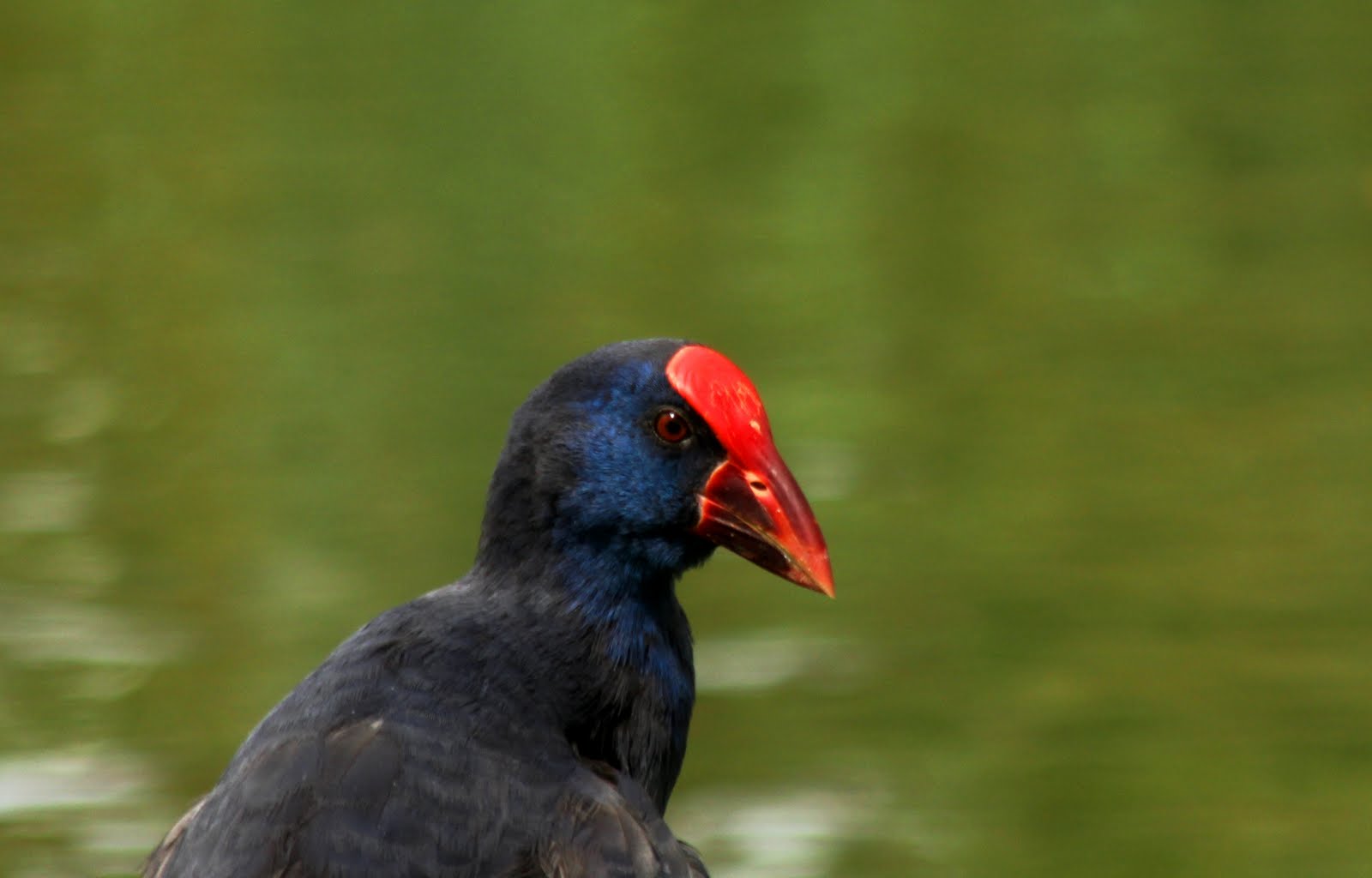
There were many birders around and most seemed to be Germans. A beckoning "Come, schnell" provided me with close views of Purple Gallinule.  Savi’s reeled from every swampy hollow, Subalpine Warblers disappeared around every patch of scrub and Woodchats dotted the tops of bushes.  Nightingales sang and Redstarts flitted.  As lunch time approached, the baby lamb chops needed some consideration (oh the flavour!) and after several glasses of rioja, we were surprised to see a Lynx run right through the restaurant.

Below - Lynx in pine wood


Wednesday, 28 March 2012

Glossy Ibis mystery solved


'Er indoors said she fancied some tapas.  Eager to please as always, a weekend trip to Seville was swiftly organised.   Seville has 300 or more tapas bars, but we didn't manage them all.  We made a start at El Rinconcillo, with a glass of fino and a plate of acorn-fed, luscious, red, iberico ham.  On to La Giganta for a salmorejo of orange and salt cod and some slow-cooked pigs cheek, with a glass of fino or two. Then to the tiny 'one man and his gas ring' Bar Eme for a wonderful plate of coquinas washed down with fino.  And so on.  You probably get the idea.

After many a clam was dispatched, dripping in olive oil and garlic, we moved on to Donana.  Overnight rain and southerly winds had left the bushes dripping in migrants.  Willow Warblers, Whitethroats, Redstarts, Subalpine warblers, Wheatears, Woodchat Shrikes and Nightingales were everywhere.  We set off at dawn with our guide, firstly exploring the Stone Pine and Cork Oak forest. Serins sung from every corner; Woodlark, Crested Tit and Azure-winged Magpie were added along the way.  Mammals were the key target at this time though and an essential first stop was a regular watering hole for an Iberian Lynx.  Further down the track, half a dozen Wild Boar scuttled away.  Lynx have increased in recent years, with around 80 animals now present in the national park.

Once out onto the marshes if was clear that Donana was suffering from a major drought this winter.  There were far fewer birds than normal.  The expanding population of Glossy Ibis, now 1,000+ pairs, is expected to have a poor breeding season this year, with many birds having departed to the north to seek more favourable conditions.   Hence the remarkable numbers in the UK this winter. The remaining pools held a few Ibis, Teal, Garganey and Shoveler.  The reed edge revealed 2 Spotted Crakes, 2 Purple Herons, Little Bittern and Great Bittern.  Isolated bushes all held migrants; best of all, a Ring Ouzel and a splendid male Black-eared Wheatear.  The dried-out wetlands had a column of Griffon Vultures descending to a dead horse and singing Calandra Larks were everywhere.  As the sun rose high into the sky, a spot of raptor watching added Spanish Imperial, Short-toed and Booted Eagles, and Lesser and Common Kestrels to the vultures and ubiquitous Black Kites.


Finally, to the main flood by the town of El Rocio.  Hundreds of Flamingo, Shoveler, Teal, Black-tailed Godwits and Coots worked their way around the shallow, drying lagoon.   Our guide had said check every coot carefully, a technique that finally ‘dug out’ at least 4 knob-less Red-knobbed Coots from amongst their even-more knob-less cousins.  Northward-bound waders fed furiously around the margins, with half a dozen Temminck's Stints being the cream of the crop.  Streams of birds circling down from on-high signalled the first major arrival in the area of Collared Pratincoles and Gull-billed Terns.


It was time for more fino and coquinas before contemplating the agonies of the return flight with Ryanair, the company that puts the customer last.  Pallid Swifts screamed their approval as we snuck a few extra pounds past the hand luggage Gestapo.


Below - Sharp-ribbed Salamander, Jamon Iberico and Black-eared Wheatear.


Wednesday, 21 September 2011

Scrapes, plums and flaming O's


Probably not the most popular person yesterday as I collected samples of invertebrates from the scrape at Minsmere.  A flurry of birds and all were gone - apart from a couple of tame Pec Sands and 'Fiona' the Flaming O.  The invertebrate samples will help inform management, providing further information on the food resource available to birds in water of differing salinities.  More on this when the results are in.  A couple of Whimbrel and a fly-by Curlew Sandpiper added interest.

Back onto the path and the scrape-side bushes were dripping with ripe plums. There seems to be a bewildering array of ‘wild plums’ to be found in our hedgerows. Fruits of differing sizes and ranging in colour from yellow and red through to purple. The plum is thought to be the result of hybridization between the Sloe Prunus spinosa and the Cherry Plum Prunus cerasifera. Such hybrids and an array of back-crosses fall under the Wild Plum Prunus domestica heading, with various forms or subspecies. These late-ripening fruits at Minsmere seem to fall into the 'Bullace' category (P. d. insititia).  In a minute or two, enough were gathered to produce a tasty Wild Plum Frangipane - just like this.

Tuesday, 13 September 2011

Chipirones and carrots


The top priority as we pulled into Sant Carles de la Rapita was a plate of chipirones (fried little squid) and a cold beer. A plate of razor clams drizzled with oil and lemon soon followed, oh and some octopus 'a la plancha' of course. Several hundred Swallows moved south past the front of the harbour-side bar as we swallowed. The first of many Audouin’s Gulls drifted by. Another plate of chipirones? So started our weekend seafood extravaganza in the Ebro Delta in Spain.

After a long lunch we drifted out into the delta to work up an appetite. Rice fields everywhere; the wet harvested areas full of egrets and herons. Most of the delta is now given over to rice production but there are a few protected areas of wetland (but many are privately owned by hunters) that support tens of thousands of waterbirds. The brackish La Tancada lagoons held 300+ Greater Flamingos and many passage waders; Little Stints were everywhere and Kentish Plovers dotted about.

L'Encanyissada is a large shallow freshwater lake surrounded by reedbeds. Hundreds of duck, including Red-crested Pochard, and another 200+ Flamingo formed the main birdy backdrop. At least 150 Whiskered Terns hawked back and forth along the margins or perched on every stick that stuck out of the water. Little Bitterns and Squacco Herons flew hither and thither. A flock of 8 carrot-beaked Caspian Terns arrived in front of us. As dusk drew near, Night Herons appeared miraculously all around and straggling flocks of Purple Herons rose out of the reeds. Stomachs began to rumble. We were soon into the main event; sucking the juicy brains out of Mediterranean Red Prawns, slurping more clams out of their garlicky shells and working through a huge pot of mixed fishes in fishermans sauce thickened with a garlic and almond picada. Yum. A fine Rioja eased their passage.
The following morning we headed out to Riet Vell, where the SEO (Spanish Ornithological Society) have a site than produces organic rice. The harvested fields were left wet and held many waders; Temminck's Stints, Wood Sands, Curlew Sands, Greenshanks and LRPs were the most numerous. A quick look from the hide overlooking the reedy lagoon resulted in an eye to beak meeting with a Purple Gallinule.

Zig-zagging through the rice fields we arrived at El Garxal lagoon. Hundreds of terns (Common, Little and Sandwich) congregated along the shoreline, along with more Whiskered and another couple of Caspian Terns and many Med Gulls. Three flocks of Glossy Ibis, totalling around 200 birds, arrived off the sea and headed inland. Fan-tailed Warblers zitted up and down and Sardinians rattled. A Praying Mantis obliging sat on my finger, wondering if I looked like dinner. Dinner did you say? We eased back to a restaurant on the edge of some marshland. Is that a Moustached Warbler in front of those Penduline Tits? Never mind, here come the langoustines with green beans and basil (steady, that's enough of the vegetables), then the clams, the smoked eel and yet more crispy yet succulent chipirones.

Swallows continued to flood south, now joined by increasing numbers of Sand Martins, as more seafood headed in the same direction, washed down with a nice chilled Cava. More Audouin’s Gulls floated by. Sea Cucumbers anyone? A great weekend, shame we didn't have more time, I didn't try the oysters.

The full list:
Squid, cuttlefish, octopus
3 species of prawn
4 species of clam, including razors and tellins
Mussels
A spikey-shelled whelky-type thing
Eels
Hake, sole, monkfish, salt-cod, anchovies, sardines, fried baby fish.


Tuesday, 30 August 2011

Pickled walnuts


Okay, so a brief diversion to another great passion of mine - food, especially if it’s obtained free of charge whilst out in the countryside. On a visit to darkest Essex a month or so back, there was little to do other than stare up into a walnut tree pondering the unripe green nuts and wondering why the visit hadn’t been arranged for later in the year. “You could pickle them” said Jon.

By the time I arrived home, I had stopped at three random walnut trees and gathered a bucketful. Now I have 20 years supply of pickled walnuts, probably the best thing about Christmas. And this is how it happened.