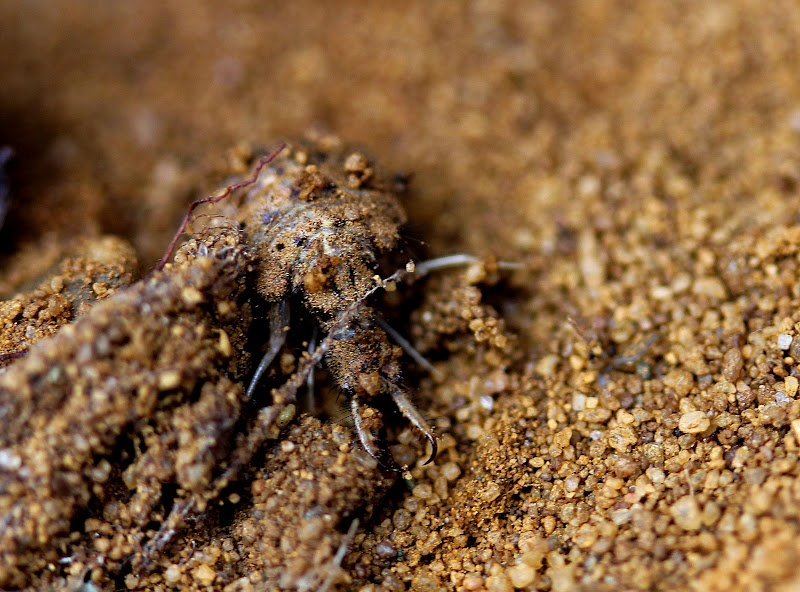
With perfect timing some good weather at last arrived as we embarked on an assessment of invertebrate habitat at Minsmere this week. Overall, there is a good diversity of habitat on this section of the Suffolk coast but the increasing numbers of Red Deer and the impact of their trampling and browsing is a concern in some areas. The trip turned into a bit of a general bio-blitz, with a good range of local specialities logged over a couple of days.
Antlions are one of
those local specialities, with their characteristic larval pits even being found
around the visitor centre walls. We
concentrated our search down at North Warren where a concentration of 1000+
pits had been counted earlier in the season.
Many had been washed away by recent heavy rain but a good number
remained. The sand at the bottom of the pits conceals a ‘Doctor Who’ monster of
a larva. As soon as a couple of ants
were ‘persuaded’ to wander around the pit edge, a deadly flick of sand knocked
them down to the waiting jaws.

Plenty of Grayling and
Silver-studded Blue butterflies were on the wing across the heathland, a long
list of bees was steadily accumulated, and each gorse bush seemed to be home a
few of the widespread Labyrinth Spider Agelena labyrinthica; their large sheet
webs with a tubular retreat being very obvious.
Natterjack Toads have had a good year with thousands of tadpoles being
seen earlier in the year despite the ponds being rather churned up by deer. More by luck than skill we came across a toad
posing nicely within a hollow. Nearby we
found the large Robber-fly Eutolmus rufibarbis.
This splendid beast is a scarce species of southern heathlands,
especially Breckland. It lays its eggs
in slits in plant stems, with the emerging larvae entering the soil and
predating dung beetle larvae. A number
of scarce plants were encountered, Red-tipped Cudweed, the diminuative Smooth
Cat’s-ear, Mossy Stonecrop and two species of Catchfly: Sand and
Small-flowered. Both had just finished
flowering but were still readily identifiable from the developing seed
capsules.


We tried not to look for
birds but managed to see a few Stone Curlews and it would have been rude not to
watch the group of four Spoonbills that circled, landed and fed in front of us. These were no doubt some of the 12 or more
Spoonbills currently loafing on the Suffolk coast and includes a 2011
German-ringed nestling which spent last winter on the Essex coast. Stone Curlews have had a moderate year. Five chicks have so far fledged from the ten
pairs in the Minsmere area. These birds
generally choose undisturbed areas well away from public access but this year
one pair settled close to the visitor centre, with volunteers posted at a
suitable vantage point to point them out to visitors.


