Tuesday, 5 May 2015

Great Knot


Chongming Dongtan is an important stopover point for migrating Great Knot. The Great Knot is a long distance migrant that uses a limited number of stopover sites between the wintering sites in Australia and the Russian breeding areas. The Great Knot is also a wader that is in some trouble; numbers have declined sharply in recent years. Habitat loss and degradation, hunting, lack of food and pollution all form potentially significant threats.  Students from Fudan University have been studying Great Knot to understand their migration strategy. This year, birds are being radio-tagged and leg-flagged at Chongming.  The birds are caught by ex-hunters sat out on the tidal flats who whistle the birds down to a clap net.  Remarkable stuff.

Studies have shown that many Great Knot undertake a long flight straight from Australia to the north Yellow Sea, with varying numbers stopping off at Chongming before completing the short hop up to the north Yellow Sea.  This may largely depend on weather conditions. Birds may stay at Chongming just a day, or for up to 2 weeks, again largely dependent on weather. This is reversed in the autumn, with a long flight south from Chongming.  Studies show that birds attain a significantly higher body weight at Chongming Dongtan during the southward than northward migration. The Fudan University team are also stationed on the Chinese/Korean border to await northward-bound radio-tagged birds. Birds have been recorded arriving the day after leaving Chongming.


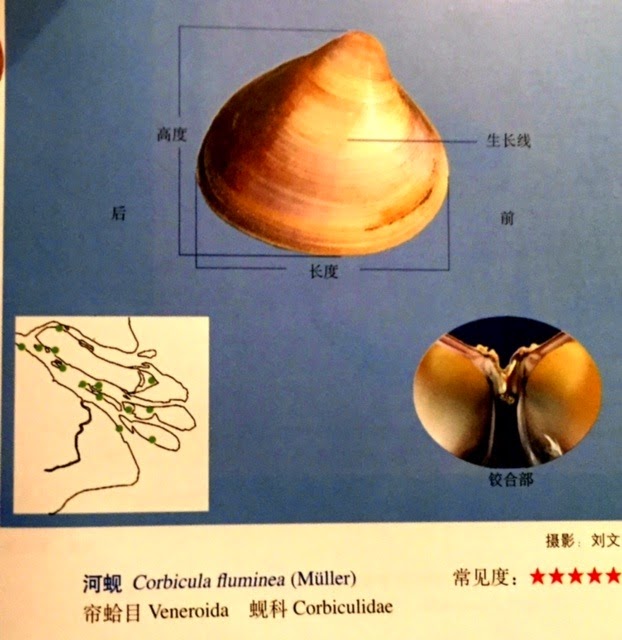
The diet of the Great Knot is mainly bivalve molluscs, gastropods, polychaete worms, crabs and shrimps.  At Chongming the main food is the small gastropod Assiminea violacea and the clam Corbicula fluminea; beasts of brackish waters that like the mudflats towards the mouth of the Yangtze. These two can form 70% of the diet of Great Knot at Chongming and are critical to its migration strategy.

Photos: above: Great Knot, clap-netting, fitting radio-tags and leg-flags.
Below: bird with radio-tag, autumn Great Knot, food!, shell-fish gatherer.




Tuesday, 28 April 2015

Knee-deep in buntings


Chongming Dongtan National Nature Reserve is located at the seaward end of Chongming Island in the mouth of the Yangtze River in China.  With my third visit in little over a year it’s beginning to feel like home from home.  The ‘Bird Habitat Optimisation Project’ we have been involved with is progressing at speed.  Twenty-seven km of 8 m high sea wall and a series of sluices (water gates) have now been completed. The early stages of the habitat creation are now underway and we are back on site to check all is going to plan.

The project aims firstly to eradicate, by cutting and flooding, the invasive non-native Cord-grass Spartina alternifolia that has spread across 1,600 ha of mudflats and secondly, to create habitats to support the priority species of waders, wildfowl, cranes and reedbed specialists such as the Reed Parrotbill, within the 2,500 ha project area. Wide channels and meandering creeks are being created to carry water around the site. Nesting and roosting islands are being created in lagoon habitats.  Open pools and creeks are being formed in the reedbeds.  Some of the creeks are being formed by carving into the mud with high pressure water hoses and the resultant liquid slurry is pumped into embanked areas to settle out and form the islands.  The completed scheme will have 425 ha of reedbed, 1000 ha of brackish lagoons and 160 ha of saltmarsh. Water will enter from the Yangtze on high tides and flow through the site around huge perimeter canals 40m wide and 4m deep.

The site is a sea of mud as around 50 excavators and 200 workers attempt to create the new habitats out of the Spartina dominated marsh.  All around, migration is in full swing. Our first morning was cloudy and wet with birds leaping out of every bush. Buntings were everywhere; Little, Yellow-browed, Chestnut-eared, Black-faced and Tristram's were trying to out-'tick' each other. Red-flanked Bluetails and Olive-backed Pipits lurked under the trees.  It's tough working here but someone's got to do it.


Hoardes of swallows feed around the excavators, A trio of Reed Buntings; Common, Pallas's and Japanese, flit around the vegetation, and Red-throated Pipits call overhead every minute or so.  Mongolian Plovers, Terek Sandpipers and Turnstones dodge the diggers in the muddy pools.   The site continues to turn up surprises, not least the flock of 3 Long-billed Dowitchers feeding in one pool.

Photos: above: Black-faced Bunting, diggers in unison, hosing ditches, water control structure.
below: Long-billed Dowitcher, Olive-backed Pipit, female Pallas's Reed Bunting.


Monday, 6 April 2015

Champagne and forests


With my wine supplies and the Euro both at low levels it was time for a quick trip across to France to visit the Champagne region and beyond. Cruising along a French motorway is not the best way to build a good bird list.  A couple of White Storks heading north were the highlight in a rather barren landscape.  The countryside was one of huge open arable fields with little or no rough ground or weedy corners.  The cleaned and manicured environment appeared to have little space for birdlife other than pigeons and crows.  Into the champagne region, the vineyards above the arable land supported a few Woodlarks and Stonechats, whilst Serin and Black Redstart were a feature of the villages. Even birds of prey seemed very scarce; a few Buzzards, a Hen Harrier and a handful of Black Kites on the move.

The exception to this general impoverishment seemed to be the woodlands.  They were full of birds; several species of woodpeckers including Black and Middle-spotted, lots of Nuthatches, Short-toed Treecreepers, Hawfinch, Firecrests, Marsh and Willow Tits.  The ground flora was also rich; the abundant Wood Anemone and Cowslip seemed to be 2-3 weeks ahead of the UK.

Why should this be so different to my local woods where all the woodland specialities have dwindled to zero in recent times?  One obvious difference is that all French woodlands seem to be managed.  Stacks of fire wood are a ubiquitous feature both in the forest and throughout every village.  The French forest management is based on high forest of native species, with long rotations, small-scale felling and mixed age structures, in contrast to the UK forestry obsession with plantations of non-native conifers that damaged so much of our ancient woodland.  The French reliance on natural regeneration from ‘mother trees’ promotes a diverse woodland structure from saplings through to tall mature trees.  The woodlands also seemed to be wet; lacking the network of drainage ditches so obvious in many UK woodlands.


Although deer are present, they do not seem to be in large numbers, nor do the woodlands show any obvious browse effects.  Wild Boar are also obvious, or at least evidence of their foraging are everywhere.  The rooting activities of Boar are claimed to be beneficial for natural regeneration but may have damaging effects at high densities.  Shooting is commonplace and no doubt keeps numbers of both deer and boar in check.  Again by contrast, we have ineffective deer control in many areas and a blinkered view to allowing Wild Boar to re-establish in our woodlands.  My local ‘protected’ woodlands are sadly owned by the Woodland Trust who do little or no management but do promote open access.  Dog-walkers and off-road cyclists seem to be the dominant users.

Saturday, 21 February 2015

Thinking outside the box


What does my job as an ecologist entail?  Well, I guess it can be summed up as ensuring the nature reserves I have responsibility for meet their objectives.  This would normally focus on the key habitat condition or species targets.  One other area of work that particularly interests me is the management of a reserve to enhance the enjoyment visitors will gain from it.  This may involve ‘tricks’ to pull birds or other wildlife close to viewpoints through habitat manipulation, or the provision of the viewpoint in the right location.  On most reserves, the default option for viewing is an observation hide with its standard rectangular ‘box’ shape and narrow shuttered viewing slots.  Surely it is about time we were thinking outside the box.

A year ago, I was fortunate to visit Varanger in northern Norway and meet Tormod Amundsen and Elin Taranger of Biotope, an architectural business with special expertise in birds and birding.  Their approach to birding architecture is new and inspiring.  To cut a long story short, Tormod and I decided to visit a number of sites in the UK in order to promote discussion about the way we view wildlife and how the design or form of a viewing structure should reflect its specific function.

In a hectic 10 days we toured from Norfolk to Somerset to Dorset to Yorkshire and to Teeside, discovering some great projects in development and hopefully inspiring a few more.  Meetings with birders at Minsmere, Poole Harbour and Flamborough Head were particularly enjoyable.  We even managed a few birds along the way; Bittern, Bearded Tits, Water Pipit, Black-necked Grebe, Great White Egrets, a million Starlings, Woodlarks, Spoonbills, Rough-legged Buzzard, Merlin, Pink-footed and Greenland White-fronted Goose.  Site by site, Tormod’s quadcopter and camera captured aerial images to help plan the projects.

So what is wrong with the standard ‘box’ hide?  Well, in some situations very little, but why should we expect one standard design meet all the needs of an increasingly sophisticated viewing audience?  We may need structures to welcome visitors to a reserve, some for close viewing, some for elevated viewing over a habitat or landscape, some custom-built photographic hides, some to get us out of the wind and of course some to reduce disturbance of wildlife, as after all, there is a clue in the name.  Do many hides reduce disturbance? Or do birds just get used to the presence of people in that particular situation?  Viewing screens are a particular bête-noire of mine. Most magnificently silhouette the observer against the sky from the bird’s eye view. Do you seriously think they don’t know you are there?


The habitat and the viewpoint should form a partnership, each complimenting the other.  This will often involve careful design and management of the habitat as well as carefully chosen viewpoint designs and locations that enable great views of wildlife and habitat. The form of the viewpoint must follow its function.  We need flexibility, diversity and innovation.  Thanks to Tormod, reserve staff and birders along the way, I hope we have generated a whole range of ideas; some of which may be coming to a reserve near you.